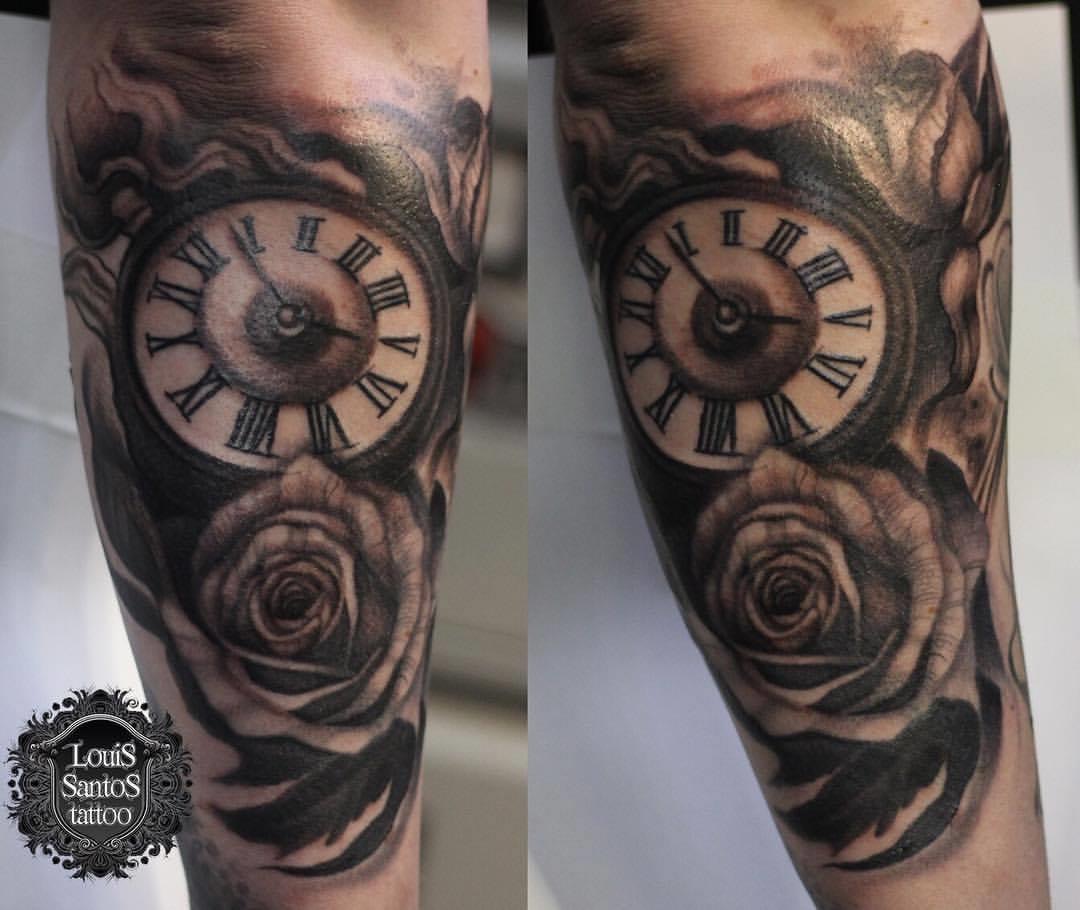

Manchester Tattoo Studio

Clocks have been an essential part of human civilization for thousands of years, serving as instruments to measure and track the passage of time. From ancient sundials to modern atomic clocks, these timekeeping devices have evolved in design and precision, shaping our daily routines and helping us synchronize our lives. Let’s delve into the world of clocks and discover their fascinating history and significance.
The concept of measuring time dates back to ancient civilizations. Early societies used natural phenomena like the movement of the sun, moon, and stars to mark the passing hours. Sundials, one of the earliest forms of clocks, employed shadows cast by the sun to indicate the time. These simple devices allowed people to divide the day into distinct periods, enabling them to organize their activities.
As civilizations advanced, so did the technology of timekeeping. Water clocks, or clepsydras, emerged in ancient Egypt and Greece. These devices used the flow of water from a vessel to measure time, with markings indicating the hours. Water clocks provided a more accurate and portable means of timekeeping, aiding various societal functions, including agriculture, trade, and religious ceremonies.
The mechanical clock, driven by weights and gears, made its appearance in medieval Europe. These early mechanical clocks, commonly found in towers and cathedrals, struck the hours with bells and had rotating hands to display the time. The invention of the escapement mechanism, which controlled the release of energy in a regulated manner, greatly improved the accuracy of mechanical clocks.
The 14th century witnessed the advent of the first portable mechanical clocks, known as pocket watches. These timepieces, usually worn as pendants, transformed timekeeping into a personal affair. With the development of spring-driven mechanisms in the 15th century, pocket watches became more reliable and convenient, paving the way for their widespread use.
The Industrial Revolution in the 18th and 19th centuries brought about significant advancements in clockmaking. The introduction of mass production techniques and the use of interchangeable parts revolutionized the industry, making clocks more affordable and accessible to the general public. Grandfather clocks, with their elegant wooden cases and pendulum movements, became popular household fixtures, symbolizing both practicality and aesthetic appeal.
In the 20th century, electronic and quartz clocks ushered in a new era of timekeeping. Quartz clocks, utilizing the oscillations of a quartz crystal, provided unparalleled accuracy and reliability. They gradually replaced mechanical timepieces in many applications, from wristwatches to wall clocks, due to their affordability and precision. The introduction of digital displays and atomic clocks, which employ the vibrations of atoms to measure time, pushed the boundaries of accuracy even further.
Today, clocks are not only functional timekeeping devices but also design statements and decorative objects. From classic analog clocks to sleek digital displays, there is a vast array of styles and features to choose from. Clocks are integrated into various devices, such as smartphones and computers, further shaping our relationship with time and punctuality.
Beyond their practical uses, clocks have also taken on symbolic meanings. They serve as reminders of mortality and the finite nature of time, prompting reflections on the passage of life. Clocks have found their way into literature, art, and culture, representing themes of urgency, order, and the cyclical nature of existence.
In conclusion, clocks have played a pivotal role in human history, aiding our understanding and management of time. They have evolved from simple sundials and water clocks to intricate mechanical timepieces and modern electronic devices. Clocks continue to be essential tools in our daily lives, keeping us synchronized and enabling us to organize our activities efficiently. As technology advances, clocks will undoubtedly undergo further transformations, but their fundamental purpose of measuring time will remain constant.
|
|