

Egyptian God Tattoo Idea
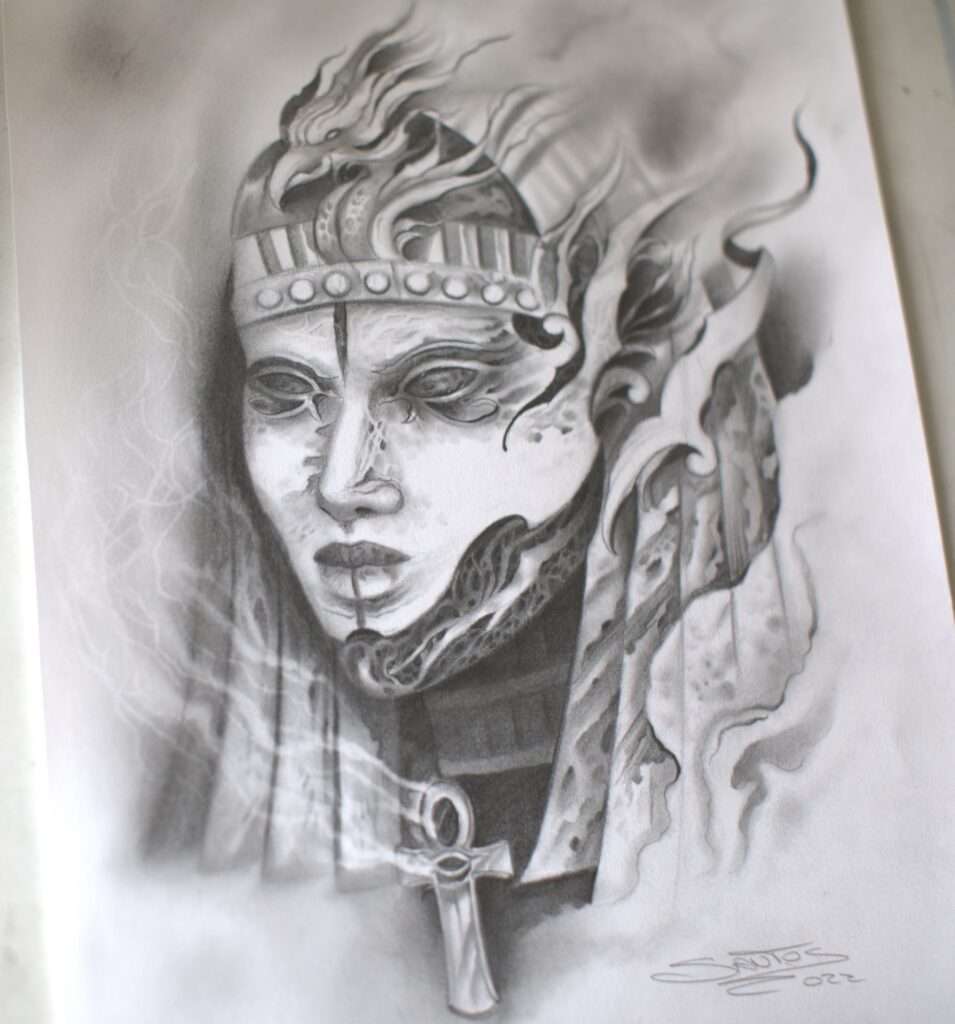
Manchester Tattoo Artist
Ancient Egyptian mythology is a rich and complex tapestry of gods and goddesses, each with its own distinct characteristics, roles, and significance in the culture and religious beliefs of ancient Egypt. These deities played a central role in the daily lives of the Egyptians, influencing everything from agriculture to death rituals. In this exploration, we will delve into some of the most prominent and fascinating deities of ancient Egypt. 1. **Ra**: Ra, the sun god, was one of the most important deities in Egyptian mythology. He was often depicted as a man with a falcon head, symbolizing his connection to the sun. Ra was believed to ride his sun boat across the sky during the day and through the underworld at night. He represented light, warmth, and life. 2. **Isis**: Isis was a goddess associated with magic, motherhood, and protection. She was often depicted with a throne-shaped headdress and a sun-disk. Isis played a vital role in the story of Osiris, her husband, whom she resurrected after his murder by Set. This tale symbolized the cycle of life, death, and rebirth. 3. **Osiris**: Osiris, the god of the afterlife and agriculture, was one of the most revered gods in ancient Egypt. He was often portrayed as a mummified figure, symbolizing the journey to the afterlife. Osiris represented the fertile Nile floodplains, linking agricultural prosperity with the promise of an afterlife. 4. **Horus**: Horus, the god of the sky and kingship, was depicted as a falcon-headed deity. He was considered the protector of the pharaoh and a symbol of divine kingship. The concept of the “Eye of Horus” represented protection and healing. 5. **Anubis**: Anubis, often depicted as a jackal-headed god, was the guardian of the dead and the god of embalming. He played a crucial role in the mummification process and guided souls through the afterlife. Anubis ensured that the deceased’s heart was weighed against the feather of Ma’at for judgment. 6. **Bastet**: Bastet, a lioness or cat-headed goddess, represented home, fertility, and domesticity. She was also a protective deity, believed to ward off evil spirits. Cats were held in high regard, and harming one was considered a serious offense. 7. **Thoth**: Thoth, the ibis-headed god, was associated with wisdom, writing, and knowledge. He played a pivotal role in recording the deeds of the deceased during the judgment of the soul. Thoth was also credited with inventing hieroglyphs, which were used for religious texts and monumental inscriptions. 8. **Sekhmet**: Sekhmet, a lioness-headed goddess, was a powerful deity associated with destruction and healing. She was believed to be the daughter of Ra and had the ability to unleash plagues and epidemics but could also cure illnesses. 9. **Set**: Set, often depicted as a chaotic, animalistic figure, was the god of chaos, storms, and foreigners. He was both feared and revered, symbolizing the untamed forces of nature. Set was considered the rival of Horus and was often associated with disorder. 10. **Ma’at**: Ma’at represented the concept of balance, harmony, and truth. She was often depicted as a woman with an ostrich feather on her head. The Pharaoh was seen as the guardian of Ma’at, responsible for upholding justice and order in society. These are just a few of the many gods and goddesses that populated the pantheon of ancient Egyptian mythology. Each deity had a specific role and significance in the religious and cultural life of the ancient Egyptians, reflecting their beliefs in the cyclical nature of life, the importance of the afterlife, and the interconnectedness of the natural world.